You can keep browsing what you already opened. Anything that needs the network will resume on its own as soon as it is back.
Back online
A new version is available
You can update now or carry on: the app never updates itself while you are using it.
Cookies
We only use technical cookies: the ones that keep you signed in and remember your language. No tracking and no advertising. The only third party is the card payment one, and it loads only on the page where you pay.
Read the full notice.
The supply chain of the futurewith Carlo OttavianoTalkFree
The supply chain of the future
From recovering raw materials to choosing ingredients grown with regenerative farming models
Sunday 15 November
·
12:00–12:45
Piazza Verdi
The future of gelato begins in the fields too. From recovering raw materials to regenerative farming models, a conversation on the choices that connect growers and gelato makers, and on their impact along the chain.
Who is there
With
Carlo Catani
He is the creator and president of Tempi di Recupero, an association that now counts almost 400 members, about 300 of them professionals — chefs, winemakers, gelato makers, bartenders and artisans — united by an idea as simple as it is radical: to work with the product as consciously, wholly and without shortcuts as possible. He has a declared weakness for forgotten products and grape varieties, which he recovers with near-obsessive constancy. Between 2007 and 2011 he directed — and from 2003 helped build from the ground up — the University of Gastronomic Sciences in Pollenzo, with which he still collaborates as a lecturer and on specific projects. Meanwhile he travels the length and breadth of Italy creating festivals, events and projects on wine, gastronomy and, above all, awareness: his true hallmark. In his spare time he has written two books: Tempi di Recupero, on food recovery at home and in the kitchen, and Chilometro Consapevole, co-written with Carlo Petrini. Solid professionalism and irony are his trademarks.
With
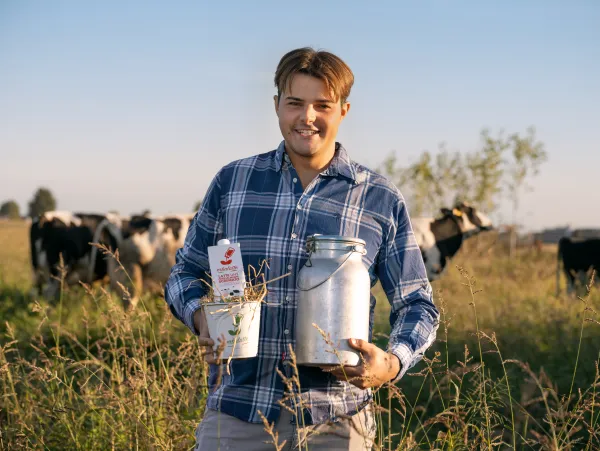
Alessandro Bergese
Alessandro Bergese, born on 18 September 1999, has been developing the Erbalatte project since 2020 within his family farm, a business with over 120 years of history in dairy. Together with his family he contributes to the farm's evolution, focusing on symbiotic agriculture and the continuous improvement of milk production. His work aims to combine innovation, sustainability and animal welfare, promoting a farming model that produces high-quality milk while respecting the environment and future generations.
With
Francesco Dammicco
I entered 'classic' publishing at twenty — first a daily, then a weekly, then a monthly — building my experience in editorial production and distribution. I lived first-hand the birth of the Gambero Rosso publishing group, where I was Commercial Director for 37 years: years in which Gambero Rosso helped promote Italian food and wine, working with companies, protection consortia and the great world of eating out. Along the way I witnessed the shift from print to digital, with the launch of gamberorosso.it in 1995, the Gambero Rosso Channel satellite TV in 1999 and then social media. A long experience that I now gladly put at the service of the carob and its beautiful world.
With
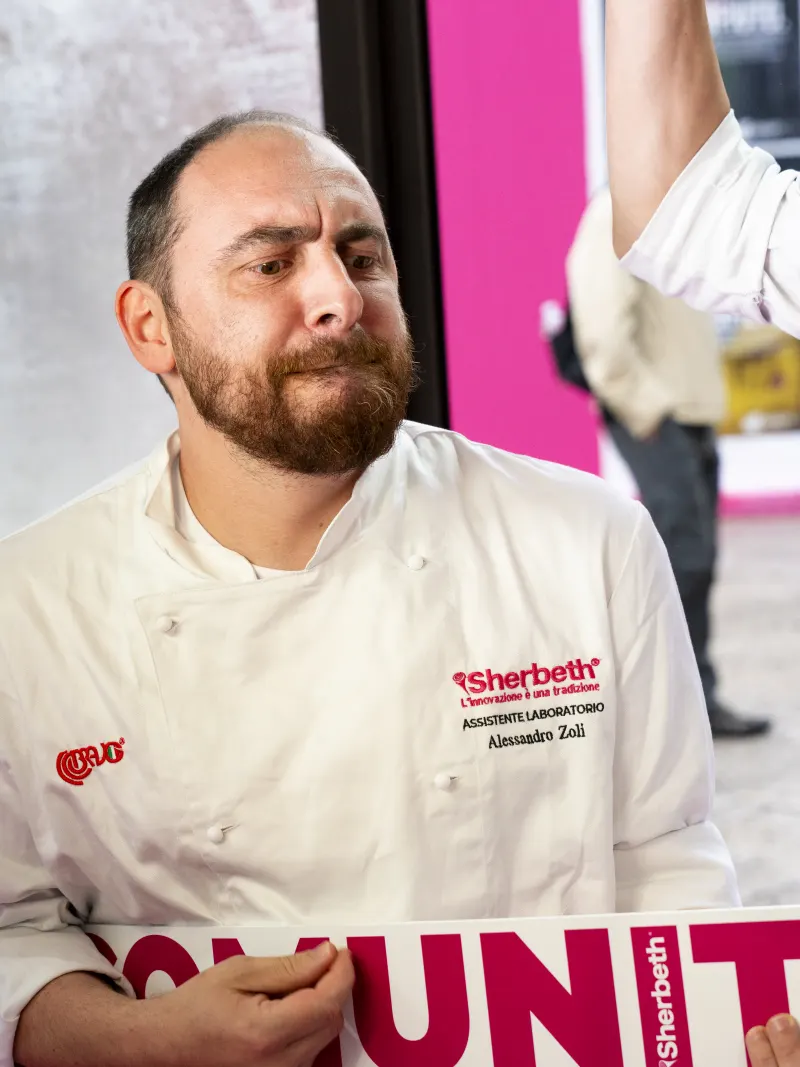
Alessandro Zoli
Assistente di laboratorio
My name is Alessandro Zoli and I have been making gelato for almost 20 years. I came to it self-taught, studying and comparing notes with colleagues who then became friends.
In my gelato I try to put myself: genuineness, and a touch of madness.
Hosted by
Carlo Ottaviano
Sicilian, a professional since 1979, Carlo Ottaviano writes the weekly taste page for Il Messaggero and covers the economics of the food and wine sector. He contributes to La Cucina Italiana and edits the column on books about food and farming culture for the monthly Leggere:Tutti. In the sector he has, among other things, directed Vie del Gusto, Il Gambero Rosso and the annual Food&Book festival in Montecatini. He is author or co-author of Olio nostrum (2016), Mani in pasta (2018), I luoghi e i racconti più strani della Sicilia (2019) and of many contributions to essays and anthologies. His awards include the Foreign Press in Italy prize as best populariser in 2020 and the Italian Academy of Cuisine's best food-and-wine journalist in 2019. Before specialising in agri-food, he worked in newspapers and television in Catania, Rome and Milan, almost always in management roles, and in corporate communication.
1. You buy Tasty2. You show your QR3. You play: taste, tell, win4. Transfer TASTY, anywhere and to anyone5. You join our events6. You find where the makers are
Tasty are the festival's credit. Buy them as often as you like, picking the package you prefer — from your phone or at one of the tills — and then go from stand to stand without reaching for anything again.
One Tasty is worth one euro of gelato. But each package is an offer of its own: the bigger it is, the more Tasty we throw in. Keep an eye on the promotions.
At the stand you open your wallet and let them scan your Wallet QR code, or you read out your Code. The maker reads it, the Tasty move, and the gelato is yours.
The code lives in the bottom bar, under your thumb: keep it ready while you queue.
You can send Tasty to anyone, as many as you like, and receive them from anyone who sends you some. And if you are holding a receipt with Tasty on it, you load it and they land in your wallet: that works even for a receipt you did not buy yourself — anyone can hand it to you, the way a paper voucher is handed over.
Whatever is left stays where it is, and you can always hand some to whoever is with you.
Who is taking part, which flavours they bring and where in the square their stand is: the map tells you in one tap, and each maker's page tells you the rest.
Favourite the ones you want to taste: you will find them together once you are there.

 Talk
Free
Talk
Free