You can keep browsing what you already opened. Anything that needs the network will resume on its own as soon as it is back.
Back online
A new version is available
You can update now or carry on: the app never updates itself while you are using it.
Cookies
We only use technical cookies: the ones that keep you signed in and remember your language. No tracking and no advertising. The only third party is the card payment one, and it loads only on the page where you pay.
Read the full notice.
Running a business in contemporary gelatowith Carlo OttavianoTalkFree
Running a business in contemporary gelato
A conversation between entrepreneurs on identity, organisation, production choices and the relationship with customers.
Saturday 14 November
·
12:00–12:45
Officina Culturale - Piazza Verdi
Opening a gelato shop means giving shape to an idea and making it work every day. A conversation between entrepreneurs on identity, organisation, production choices and the relationship with customers.
Tasting curated by Antonio Luzi
Who is there
With
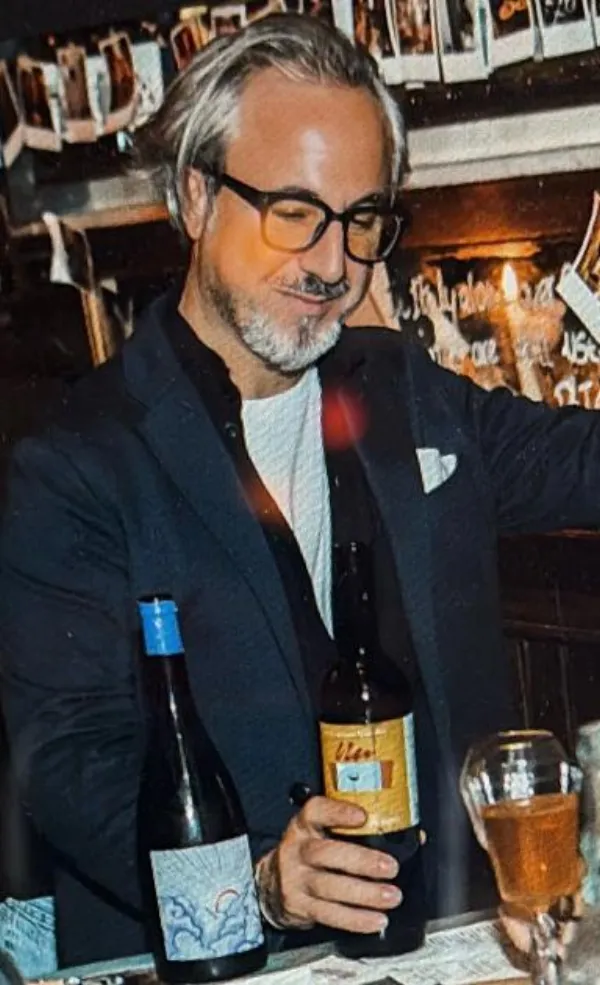
Alessandro Trezza
I turn fifty this November. I am from Brianza, trained at Bocconi in Milan in Banking and Finance, with a past as a director in private banking. At some point I chose to leave finance and return to the passions that have always accompanied me: gelato, food, wine and, above all, the land and the people who make them possible. With my family — Monia and her brother Fabio Solighetto — I founded L'Albero dei Gelati, a project that almost twenty years ago set out to imagine gelato differently: not simply to make good gelato, but to build a direct, concrete and supportive relationship with agriculture and those who practise it. From the start we sought real farming pacts, choosing small producers, respecting seasonality and biodiversity, and reducing waste and environmental impact as much as possible. A gelato we like to call agricultural, ethical, sustainable and inclusive: good, clean and fair. From the first shop in Brianza the project grew with further shops and then reached Brazil, in São Paulo, where we opened three gelaterie — transferring a philosophy rather than copying an Italian model, adapting it to the land, its farmers and its extraordinary raw materials. There too we pushed our idea of sustainability and no waste to the limit, developing fully edible cups, tubs and holders made of tapioca, turning what normally becomes waste into something eaten together with the gelato. For about fourteen years I have lived in New York, where I brought the same vision with L'Albero dei Gelati in Brooklyn: seasonality, direct relationships with farmers, Community Supported Agriculture, attention to sustainability, ethics and inclusion — a bridge between Italian food culture and American agriculture. In New York I have also developed several Italian restaurant projects on the same principle: good Italian food, local ingredients and a direct relationship with producers, with special attention to what I call agricultural wines: natural, living wines made first of all by farmers' hands. After all these years the thread is the same: before the product come the land and the people. Returning to Sherbeth has a special meaning for me: a festival I have loved for a long time, even before the joy and honour of winning it a few years ago. Coming back to share experiences, ideas and visions on the future of gelato is a privilege — and above all it means being back among people and friends for whom I feel immense affection and esteem.
With
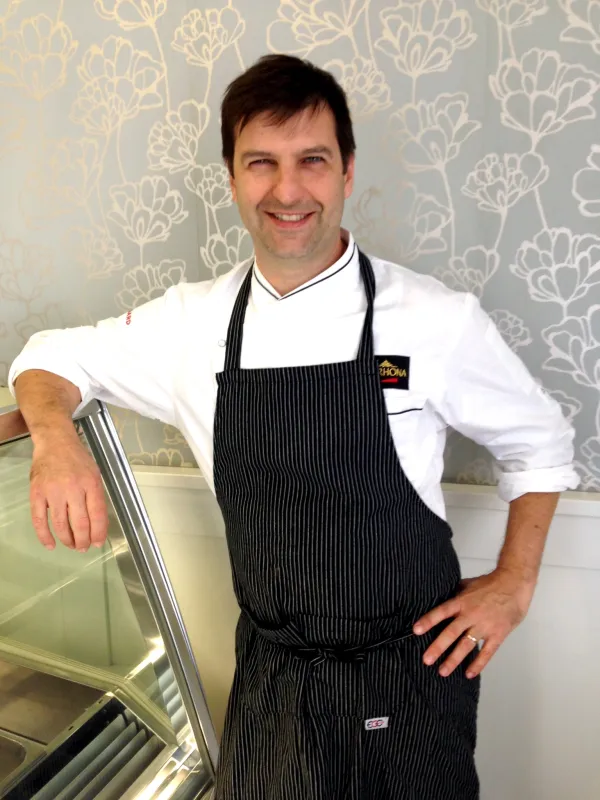
Simone De Feo
Simone De Feo is an Italian master gelato maker and baker, founder and soul of the celebrated Cremeria Capolinea in Reggio Emilia. A former IT professional with a passion for gastronomy, in his thirties he decided to leave computers for the art of gelato: in 2010, with his partner Monica Fantuzzi, he opened the Cremeria Capolinea. His approach combines the scientific rigour of his earlier training with an ethical, meticulous search for raw materials: no semi-finished products or artificial colourings, a short supply chain, organic fruit, and nuts and cocoa roasted in-house. Alongside gelato he has developed an outstanding production of sourdough panettoni and colombe, now considered among the best in Italy. Since 2017 his gelateria has consistently held Gambero Rosso's Three Cones. Today De Feo pairs the workshop with teaching contemporary gelato making (including at ALMA) and is co-author of the book Gelati (Tommasi Editore).
With
Antonio Luzi
My name is Antonio Luzi and I live in Fano, the town where I was born, on the beautiful coast of the Marche. At nineteen, after classical high school, I moved to Milan, where in 1997 I graduated in Business Economics at Bocconi University, followed the same year by a Master in International Economics in Copenhagen. I then worked in the Italian branch of an American bank, where I met my wife Paola. Perhaps it was our shared interest in cooking that brought us together: we soon discovered we were both passionate about good things, not just beautiful ones. Dozens of courses, internships and tastings later, we understood that what had begun as an interest could help us change our lives. After a few years of preparation, in 2006 we left our careers and Milan and returned to the Marche to open our gelateria, which turned twenty this year and has just gained a little sister on the seafront of Fano. My technical training began at one of Milan's historic and most prestigious gelaterie, La Bottega del Gelato of the Cardelli family, and has never stopped: sommelier and wine-tasting training with ONAV and Slow Food, courses in gelato, chocolate and large leavened breads, and above all a network of producers and colleagues built on mutual trust. Years of experimenting with ingredients and balancing techniques led me to the gelato I had in mind — intense in flavour yet light and digestible, balancing taste with the perfect structure for a take-away gelateria — and to many awards from guides, professionals and, above all, customers. Since the early years I have taken part in many events: the Agugliano festival, Sherbeth in Cefalù, the Salone del Gusto in Turin, Cheese in Bra and many local festivals. Last year I came second at the Procopio Cutò competition. I teach the gelato course at ALMA in Colorno. Fano is a small, ancient Roman town between hills and sea; our square is the last stretch of the ancient Via Flaminia, which runs through the Arch of Augustus to Rome. In 2006 the charm of the place was decisive: Renaissance palaces, medieval towers, winds that change by the hour. That beauty had to enter our gelato and all our products — simply and naturally, like the landscape around us. In the workshop we create flavours that express the territory and our own history as travellers and students of Italy's gastronomic wonders: Cantiano sour cherry, Marche-style maritozzo, a cream with fig lonzino, elderflower or Angelica pear sorbets from our hills. This year we opened a second shop, with new production, logistics and organisational challenges — and the pleasure of taking on new projects.
Hosted by
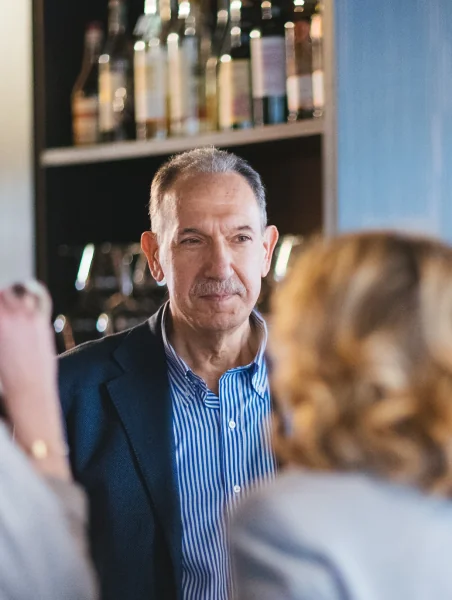
Carlo Ottaviano
Sicilian, a professional since 1979, Carlo Ottaviano writes the weekly taste page for Il Messaggero and covers the economics of the food and wine sector. He contributes to La Cucina Italiana and edits the column on books about food and farming culture for the monthly Leggere:Tutti. In the sector he has, among other things, directed Vie del Gusto, Il Gambero Rosso and the annual Food&Book festival in Montecatini. He is author or co-author of Olio nostrum (2016), Mani in pasta (2018), I luoghi e i racconti più strani della Sicilia (2019) and of many contributions to essays and anthologies. His awards include the Foreign Press in Italy prize as best populariser in 2020 and the Italian Academy of Cuisine's best food-and-wine journalist in 2019. Before specialising in agri-food, he worked in newspapers and television in Catania, Rome and Milan, almost always in management roles, and in corporate communication.
1. You buy Tasty2. You show your QR3. You play: taste, tell, win4. Transfer TASTY, anywhere and to anyone5. You join our events6. You find where the makers are
Tasty are the festival's credit. Buy them as often as you like, picking the package you prefer — from your phone or at one of the tills — and then go from stand to stand without reaching for anything again.
One Tasty is worth one euro of gelato. But each package is an offer of its own: the bigger it is, the more Tasty we throw in. Keep an eye on the promotions.
At the stand you open your wallet and let them scan your Wallet QR code, or you read out your Code. The maker reads it, the Tasty move, and the gelato is yours.
The code lives in the bottom bar, under your thumb: keep it ready while you queue.
You can send Tasty to anyone, as many as you like, and receive them from anyone who sends you some. And if you are holding a receipt with Tasty on it, you load it and they land in your wallet: that works even for a receipt you did not buy yourself — anyone can hand it to you, the way a paper voucher is handed over.
Whatever is left stays where it is, and you can always hand some to whoever is with you.
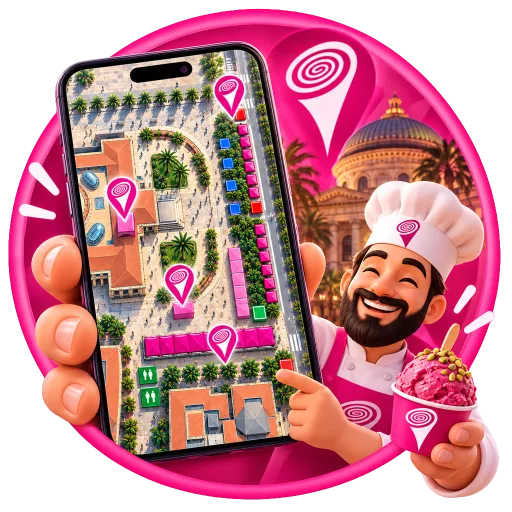
Who is taking part, which flavours they bring and where in the square their stand is: the map tells you in one tap, and each maker's page tells you the rest.
Favourite the ones you want to taste: you will find them together once you are there.

 Talk
Free
Talk
Free